
What Is Reiki? Energy Healing Without the Woo-Woo Overload
Oct 22, 2026
Curious about Reiki but not entirely sure what it is? You're not alone. Let's talk energy, relaxation, healing, and why sometimes doing absolutely nothing is exactly what we need.
So, What Actually Is Reiki?
Let's be real. When someone mentions energy healing, you might picture crystals, incense, someone waving their hands around, and a whole lot of things you don't quite understand.
And look, I love a little magic in life. But let's make this simple.
Reiki (pronounced Ray-Key) is a Japanese practice that involves gentle touch or hands held just above the body, with the intention of supporting relaxation and wellbeing.
The word Reiki is commonly translated as:
- Rei: Universal
- Ki: Life energy
The practice is based on the belief that energy flows through all living things and that working with this energy can support balance and healing.
Now, here's where I like to bring a little reality into the room.
We know our bodies are constantly working to keep us alive, responding to stress, processing emotions, repairing tissues and adjusting to the world around us.
Reiki takes a gentle, holistic approach to wellbeing. Rather than asking you to do more, achieve more or figure everything out, it creates an opportunity to simply rest.
No performance. No expectations. No need to have your entire life figured out before you lie down.
Thank goodness for that.
How Does Reiki Actually Work?
Traditionally, Reiki practitioners believe they channel universal life energy through their hands to support the recipient's natural healing process.
That's the spiritual explanation.
From a scientific perspective, we haven't established that this proposed energy exists or that it can be transferred between people. Research into Reiki has explored relaxation, anxiety, pain and wellbeing, but the evidence for specific health benefits remains limited and inconsistent.
What we can say is that many people describe Reiki sessions as deeply relaxing, comforting and peaceful.
And sometimes, having an hour where nobody needs anything from you is a pretty wonderful thing in itself.
There are so many countries around the world that have different perspectives on Reiki; many that have them in hospitals as even though they don‘t quite understand, they can and have seen the results flourish from having these practitioners in their medical and healing spaces.
So, yea, maybe some don‘t fully understand it, but you know what? That’s also a little bit of the point right? Us as practitioners, believe, learn and feel things others may not. But heck, so many people see the results. And the key? Is to allow – allow to accept that energy, positive healing energy can flow through to you.
What Happens During a Reiki Session?
First things first.
You don't need to know anything about Reiki to experience it.
You don't need to meditate, believe in anything particular, or arrive feeling peaceful.
You can turn up with your messy thoughts, your busy brain and the mental shopping list you've been carrying around since Tuesday.
You're welcome exactly as you are.
During a typical session:
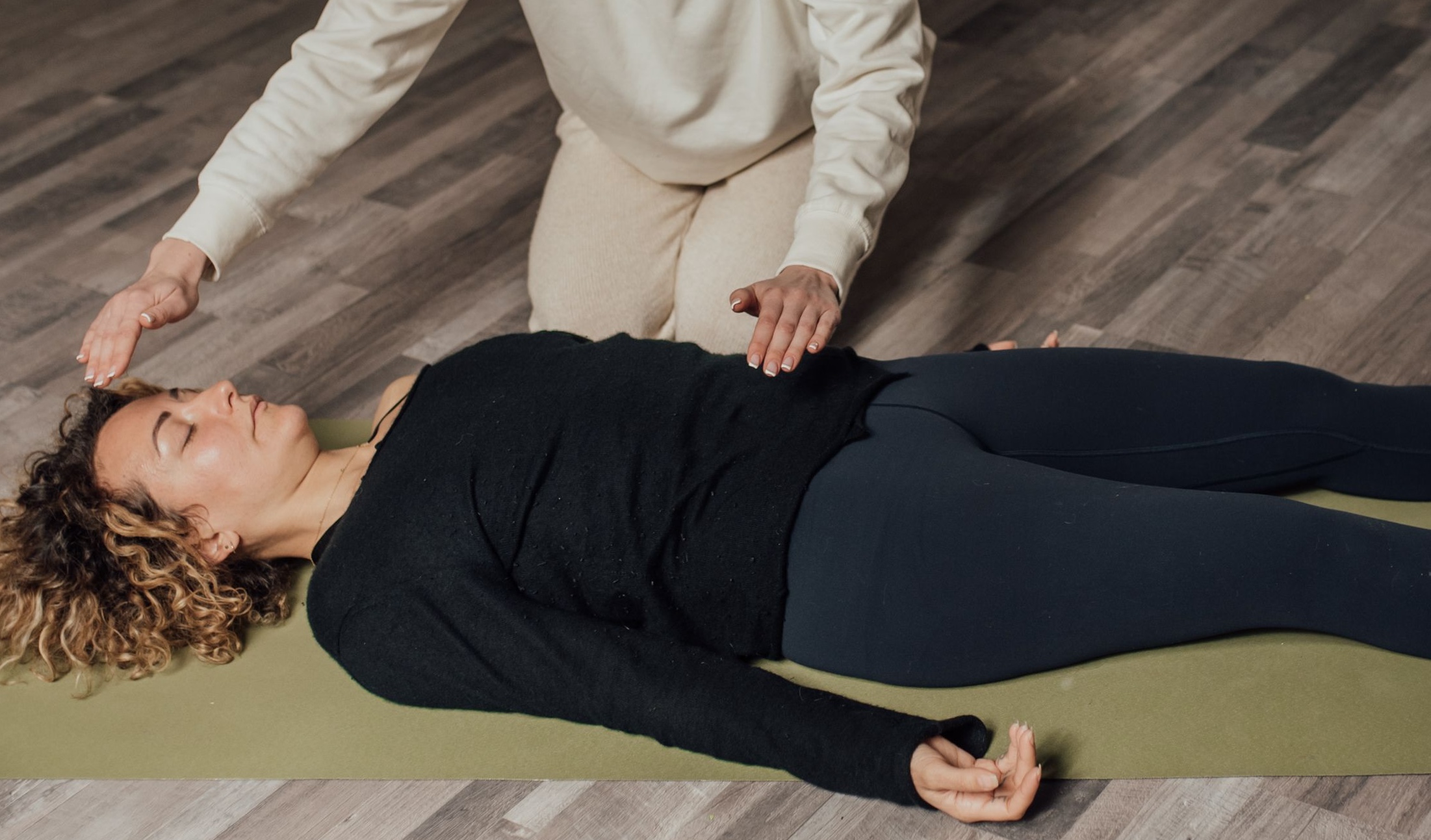
1. You'll lie down comfortably, fully clothed.
2. Your practitioner may use gentle touch or hold their hands slightly above different areas of your body.
3. You can close your eyes, relax and simply experience whatever comes up.
4. You might feel warmth, tingling, heaviness, calmness or absolutely nothing unusual.
Some people become emotional. Some drift off to sleep. Some leave feeling lighter, while others simply enjoy a good rest.
There is no right way to experience Reiki.
And no, you don't have to see colours, have a spiritual awakening or meet your great-grandmother from another lifetime.
If you do have an interesting experience, we can talk about it. But it isn't a requirement.
Reiki and Your Nervous System: Where Things Get Interesting
This is the part I particularly love.
Our nervous system is constantly responding to what's happening around us.
Stress, deadlines, relationships, financial pressure, parenting, grief, trauma, even the never-ending notifications on our phones.
It's a lot.
When we're under ongoing stress, our bodies can become accustomed to being on high alert.
We might notice:
- Racing thoughts that refuse to clock off.
- Tight shoulders and a clenched jaw.
- Difficulty switching off or sleeping.
- Feeling overwhelmed by little things.
- Being exhausted but somehow still unable to relax.
- Doomscrolling for hours and still feeling stressed; after thinking, I just stopped and disconnected right?
Sound familiar?
Reiki sessions often involve a quiet environment, gentle attention, comfortable positioning and time away from everyday demands.
These conditions may help some people feel calmer and more settled.
And when we're able to relax, our bodies have an opportunity to shift away from constant stress-related activation.
This doesn't mean Reiki has been proven to directly regulate the nervous system or heal trauma. But the experience of slowing down and feeling comfortable can be a valuable part of caring for ourselves.
You don't always need another thing to fix.
Sometimes you need permission to stop.
But Can Reiki Actually Help Us Heal?
Let's talk about the word healing, because it's a big one.
Healing isn't always about fixing something that's broken.
Sometimes healing looks like:
- Learning to rest without guilt.
- Noticing how your body feels instead of ignoring it.
- Giving yourself space to process difficult emotions.
- Recognising when you've been pushing yourself too hard.
- Finding moments of connection with yourself again.
Reiki may be one way of creating that space.
For some people, it becomes a meaningful self-care ritual. A moment to step away from the noise, reconnect with their body and reflect on what they need.
But it's important to understand that Reiki isn't a cure for physical illness, mental health conditions or trauma, and it shouldn't replace appropriate medical or psychological care.
Think of it as a complementary practice. Another possible tool in your wellbeing toolkit.
Because healing rarely comes from one magical thing.
It's usually the little things we do consistently that help us build a healthier relationship with ourselves.
And yes, sometimes one of those little things involves lying on a comfortable bed doing absolutely nothing.
Terrible, I know.
Do i believe Reiki is a healing practice and will help you heal? Absolutely.
Do You Have to Believe in Reiki for It to Work?
No particular spiritual belief is required to attend a Reiki session.
You can be spiritual, sceptical, curious or somewhere in the middle.
You can love crystals or think they're just pretty rocks.
You're still welcome.
You don't have to adopt the traditional energy explanation to appreciate the opportunity for relaxation, quiet and supportive human connection.
I always encourage people to approach new wellbeing practices with curiosity rather than pressure.
Notice how you feel.
Notice what you enjoy.
Notice what works for you.
And remember, not every practice is for every person.
That's okay too.
Reiki as Part of Your Healing Journey
Something I've learnt through exploring nervous system wellbeing, breathwork and holistic practices is that there isn't one perfect pathway to feeling better.
We're all different.
Some people find connection through movement.
Some through talking.
Some through breathwork, journaling, nature or meditation.
And some find something meaningful in Reiki.
The beautiful thing about a healing journey is that you get to discover what supports you.
You don't need to rush it.
You don't need to do it perfectly.
And you certainly don't need to become a completely different person.
Your past explains you. It doesn't define you.
Reiki can be an invitation to slow down, become curious about yourself and make space for a little more care in your life.
Not because you're broken.
But because you're human.
And being human can be bloody exhausting sometimes.
A chance to reconnect with your body, to acknowledge what it's trying to say, and to listen to ourselves on a deeper level will always help us grow and heal.
A Final Thought From Me
I don't believe healing should feel like another full-time job.
We're already busy enough.
I believe in giving ourselves opportunities to slow down, listen to what we need and explore tools that make everyday life feel a little more manageable.
Reiki is one of those practices I love offering alongside breathwork and nervous system-informed support.
Not as a miracle cure.
Not as a replacement for professional healthcare.
But as an opportunity to stop, rest and reconnect with yourself.
You don't need to force change. You just need to feel safe enough to begin.
Safe. Regulated. Connected.
Inner Voyage Co
Further Reading
If you're curious about Reiki and want to explore the research alongside the traditional practice:
- National Center for Complementary and Integrative Health (NCCIH) — Reiki: What You Need to Know.
- Cancer Research UK — Reiki as a complementary therapy.
- Cleveland Clinic — Reiki: What It Is and Potential Benefits.
These resources explore Reiki, its proposed mechanisms, current research and the importance of using complementary therapies alongside appropriate healthcare.
 Your past explains you. It doesn't define you.
Sarah is a Polyvagal Therapy Practitioner, trained chef and the founder of Inner Voyage Co., helping people support their nervous system through simple, practical daily habits, nourishing food, breathwork and holistic practices including Reiki.
SUBSCRIBE FOR WEEKLY SUPPORT
Practical tips to help your nervous system feel calm, supported and steady — delivered straight to your inbox.
We hate SPAM. We will never sell your information, for any reason.